
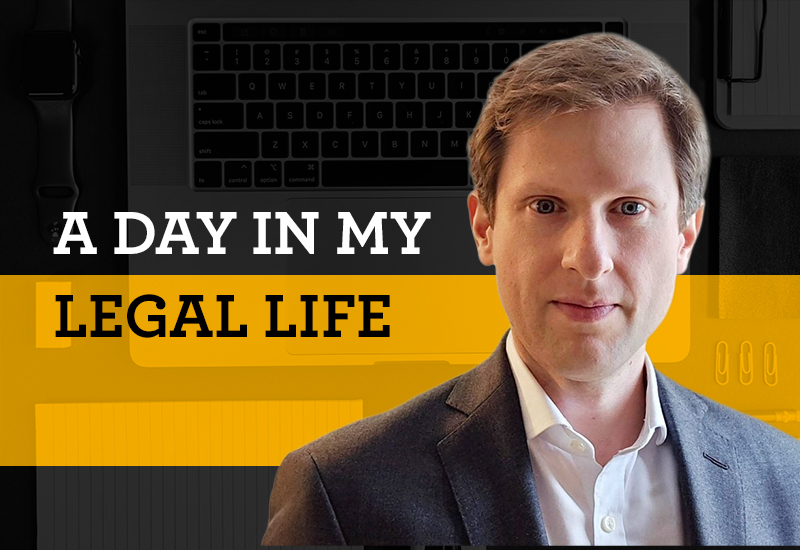

This month, we speak to Finance Consultant, Henry Ryder.
What has shaped your approach to transactional practice?
I have always gravitated towards finance and transactional work – it has been the consistent thread in my career. I started in large international firms working on high-value transactions, which gave me a strong grounding in technically demanding and fast-paced deal work.
Working both in private practice and in-house has broadened my perspective considerably. It made me much more conscious of how the legal delivery is actually experienced from the client side – the value placed on presenting solutions, saving time not wasting it, being proactive in pushing matters forward and thinking ahead, and the need for clear communication – and shaped the way I think about legal advice in practice.
What is the most challenging – and rewarding – aspect of transactional practice?
The most challenging aspect is probably everything happening all at once – deadlines, personalities, commercial pressures and changing priorities. In development finance particularly, time and delay weigh heavily.
The same dynamics are also what make the work enjoyable. Although many transactions may follow a recognisable pattern, there is something new to learn on every deal whether it’s a structure, commercial issue or set of personalities.
In my view, the best transactions are collaborative – when legal advice informs commercial decision-making and vice versa, rather than sitting at arm’s length.
It can be hugely satisfying to see a deal complete after many weeks of collaborative effort.
What attracted you to Newmanor?
As well as the firm’s focus on commercial real estate finance, which is the area I most enjoy, it was its willingness to challenge assumptions around how legal services are delivered in order to improve client experience, such as the use of fixed fees, while still remaining personal and relationship-driven.
As a specialist firm, I also liked the sense that the whole firm is pulling in the same direction on transactions.
The profession is clearly going through significant change, and I think the firm’s innovative and entrepreneurial approach leaves it very well placed to respond.
What is the best part of your working day?
Probably mid-morning, around 10:00–11:30 – when the mind is most in gear and I can properly get stuck into the most important things on the to-do list. It’s a busy but optimistic time of day, with a combination of meetings, calls and focussed work. On the downside, it’s when time seems to go the fastest.
For legal drafting though, I find late at night is better. I’m naturally a night owl – although that becomes less practical when it can’t be reconciled with an early start.
How do you switch off outside work?
I think it’s a good thing to have some low-pressure interests – ones you don’t need to do especially well – and to experiment.
My latest interests are things I used to avoid: cooking – I’d like to master the wok – and recently I started running, which is something I never thought I’d say. I suspect gardening may be coming at some point, though not yet!
Fortunately, I have instant distraction in two young boys competing for attention.