
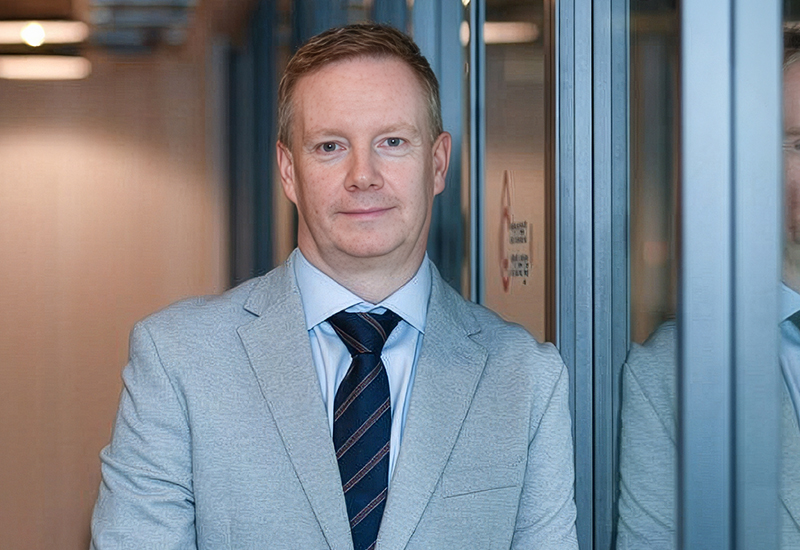

This month we speak to Craig Cunningham of Regulyne Group. Craig has a background in leading businesses and operational teams across hospitality, real estate and construction, both in improving performance and helping organisations navigate change. His focus has shifted to the built environment and building safety sector. Regulyne Group exists to be greater confidence and accountability to the built environment.
1. What is your background and experience in the property industry?
I’ve spent most of my career leading businesses and operational teams across hospitality, real estate and construction. My background is rooted in building and scaling businesses, improving performance and helping organisations navigate change.
Over the last few years, my focus has shifted firmly into the built environment and building safety sector. As COO of Regulyne Group and gatepassuk, I’ve been working closely with developers, contractors, consultants and asset owners to help them manage the increasing complexity around regulation, compliance and the Building Safety Act.
What I enjoy most about the property industry is that it’s ultimately a people business. Behind every development are individuals and organisations trying to create places that are safe, commercially successful and built to last.
2. Can you tell us a bit about your business and what you do?
Regulyne Group exists to bring greater confidence, transparency and accountability to the built environment.
Through gatepassuk, we’ve developed a pre submission readiness review that helps organisations assess whether their Gateway submissions are genuinely ready before they reach the Building Safety Regulator. The reality is that delays and rejections are often avoidable, but they come at a significant cost in both time and money.
We’re also developing MyRegulyne, which is creating a global digital trust index score for assests, helping the industry move towards a more evidence based and measurable approach to building safety.
My role as COO is to ensure we build the right partnerships, support our clients and create the operational foundations that allow the business to scale while remaining focused on solving real industry problems.
3. Who are your typical clients and how do you market your service?
Our clients are typically developers, contractors, principal designers, asset owners, consultants and organisations involved in delivering or managing higher risk assets.
We market the business in a straightforward way. We spend a lot of time listening to the industry, speaking at events, participating in discussions and building relationships. The challenges facing the sector are significant, so credibility and trust matter.
Most of our work comes through our network, industry partnerships and thought leadership. We try to add value first, share knowledge openly and demonstrate that we genuinely understand the challenges our clients are facing.
4. How did you first cross paths with Newmanor Law?
The property and construction sectors are surprisingly small worlds and, as with many good relationships, our paths crossed through shared industry connections and conversations around building safety and regulation.
What stood out to me about Newmanor Law was its practical approach and genuine understanding of the challenges facing the sector. It’s always encouraging to work alongside people that recognise that good outcomes come from collaboration rather than simply interpreting legislation in isolation.
5. What are the key challenges currently facing the real estate sector and how are you addressing them?
The sector is dealing with several challenges on multiple fronts and simultaneously. Regulatory complexity has increased significantly, particularly around higher risk buildings. At the same time, we’re seeing pressure on viability, rising costs, delays to projects and increasing scrutiny around accountability and governance.
One of the biggest challenges is confidence. Confidence that projects can move forward, confidence that decisions are properly evidenced and confidence that organisations are meeting their obligations.
Our role is to help provide that confidence. By bringing structure, clarity and evidence into the process, we help our clients identify issues earlier, improve the quality of submissions and reduce unnecessary delays.
6. What trends do you foresee shaping the real estate industry in the coming years?
I really feel that we’re moving into a period where compliance and technology become much more closely connected.
The industry is increasingly moving away from subjective interpretation towards evidence based decision making. Digital records, better data and greater transparency will become the norm rather than the exception.
I also believe artificial intelligence will play a significant role, not by replacing people, but by helping professionals make better and faster decisions. The businesses that embrace technology in a practical way and build strong governance around it will be the ones that thrive.
Ultimately, the future of the industry will be shaped by trust, accountability and the ability to demonstrate that buildings are being designed, delivered and managed safely.